
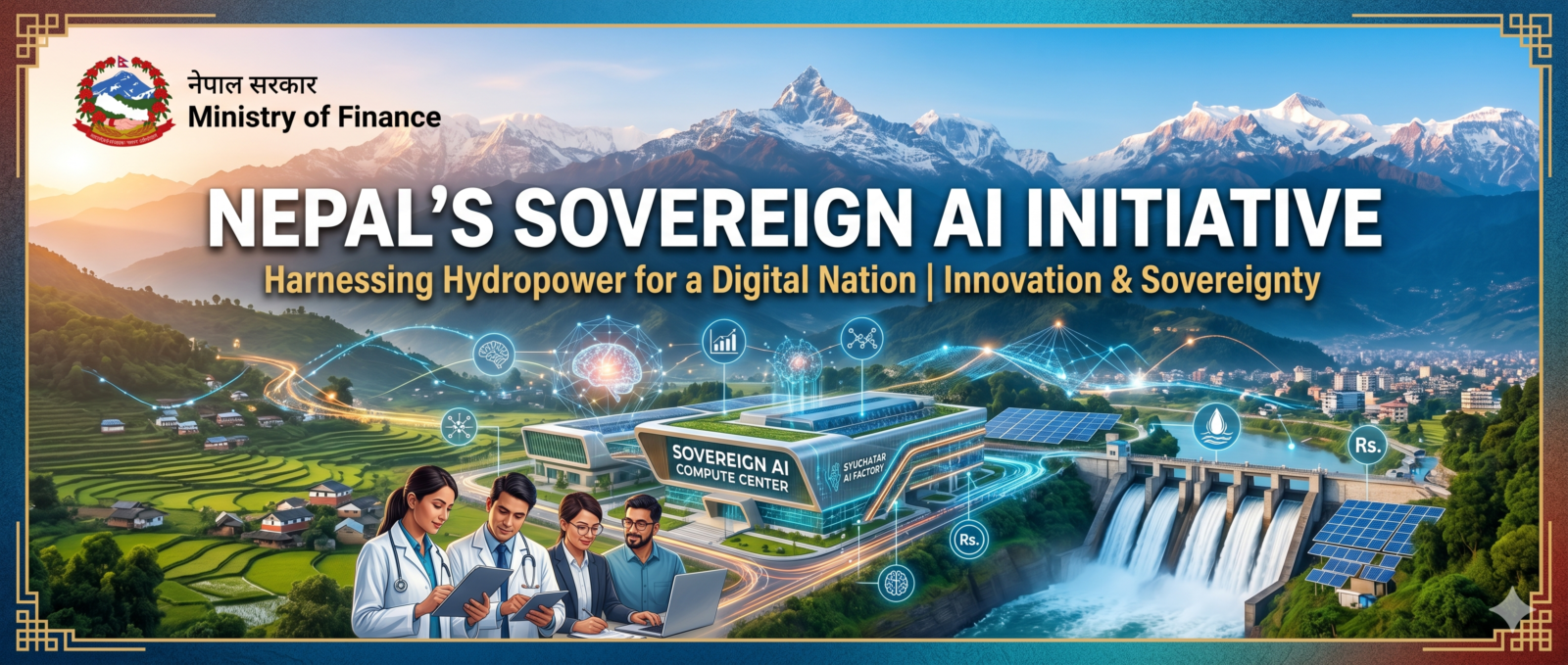
In the fiscal year 2026/27 (2083/84) budget, Finance Minister Dr. Swarnim Wagle unveiled a landmark initiative to propel Nepal into the era of artificial intelligence. The centerpiece of this digital transformation is the establishment of the country’s first “Sovereign AI Compute Center,” which will be located in Syuchatar, Kathmandu. This move signals a strategic shift from traditional infrastructure development toward building a modern, knowledge-based digital economy that integrates advanced technology with national resources.
To build this infrastructure, the government has committed to purchasing thousands of AI processing units for the Syuchatar facility. The primary objective is to democratize access to expensive computing power by providing subsidized, high-performance compute capacity to local AI entrepreneurs, researchers, and startup companies. By lowering the prohibitive hardware costs associated with training machine learning models and processing large datasets, the state aims to foster an indigenous innovation ecosystem capable of developing homegrown AI solutions.
A highly innovative aspect of this sovereign AI strategy is its synergy with Nepal’s renewable energy sector. Rather than limiting the country’s vast hydroelectric potential to raw electricity exports, the budget proposes converting clean hydropower directly into high-value AI compute services. Operating effectively as a green “AI factory,” this initiative leverages the massive energy demands of modern AI data centers to transform domestic water resources into lucrative digital exports, physically plugging Nepal into the global AI value chain.
Physical Infra vs Colocation Needs
Recognizing that physical infrastructure requires top-tier human capital, the government is also launching a targeted effort to reverse the tech brain drain. The budget outlines a plan to invite at least 15 internationally renowned Nepali AI researchers back to their home country through prestigious fellowships, empowering them to lead local research, innovation, and policy-making. To ensure a sustainable pipeline of future talent, the state is simultaneously prioritizing educational reforms that heavily emphasize mathematics and core STEM disciplines at both school and university levels.
Funding this ambitious technological leap involves creative financial engineering, notably the planned establishment of a Sovereign Wealth Fund utilizing a portion of Nepal’s foreign exchange reserves. A specialized “Motherland Fund” will be carved out to invest specifically in strategically important infrastructure, including AI factories. Coupled with an allocation of Rs. 4 billion dedicated directly to science, technology, and innovation, these financial commitments are designed to establish Nepal as a regional technology hub driven by skilled employment and high-value digital exports.